Risk Management · 2025
In this section2 topics
Risk Management Policy & Plan
Policy & Plan Description
Asia Biomass Public Company Limited and its subsidiaries are committed to achieving sustainable growth and elevating good corporate governance standards. They consider risk management crucial for protecting value, creating business opportunities, ensuring stability and sustainability, effectively responding to fluctuations in external and internal factors, limiting potential impacts on stakeholders, and achieving strategic objectives and operational goals.
The Company has established a risk management policy, which is regularly reviewed and reported to the Audit Committee and the Board of Directors. Significant risks to the Company's business operations cover strategic risks, financial risks, operational risks, sustainability risks, business disruption risks, project management risks, and IT and Cybersecurity risks.
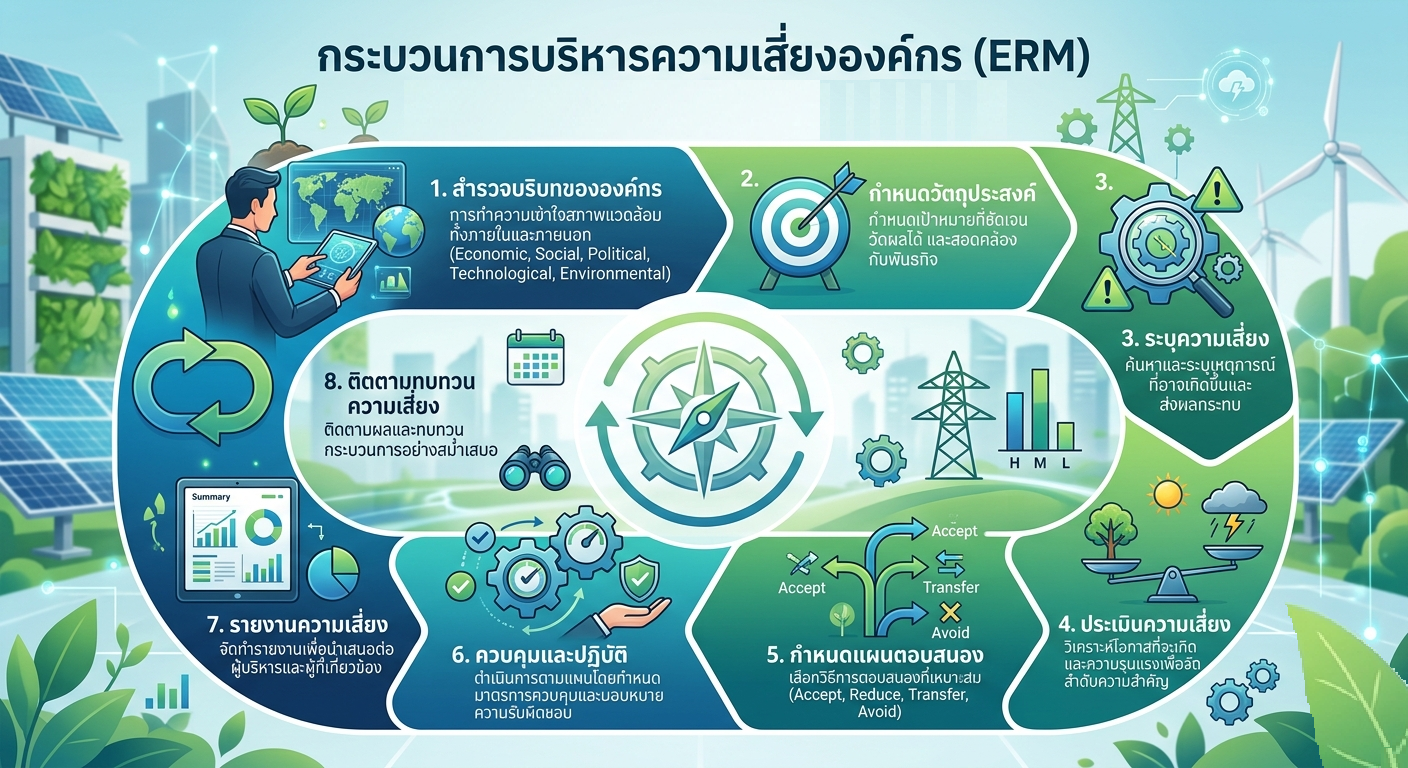
The Company systematically and continuously manages risks, covering operations from organizational context analysis, objective setting, risk identification, risk assessment, response planning, control and implementation, risk reporting, monitoring, and review. This is to ensure the process keeps pace with changes and achieves maximum efficiency. The Company recognizes the importance of risk management under rapidly changing circumstances. Therefore, it has established a clear Enterprise Risk Management (ERM) policy and framework consistent with international standards, focusing on fostering a risk culture throughout the organization to support the achievement of strategic objectives and sustainable growth. The 8-step Enterprise Risk Management Process.
Policy Document Link
https://www.asiabiomass.com/download/%e0%b8%99%e0%b9%82%e0%b8%a2%e0%b8%9a%e0%b8%b2%e0%b8%a2%e0%b8%81%e0%b8%b2%e0%b8%a3%e0%b8%9a%e0%b8%a3%e0%b8%b4%e0%b8%ab%e0%b8%b2%e0%b8%a3%e0%b8%84%e0%b8%a7%e0%b8%b2%e0%b8%a1%e0%b9%80%e0%b8%aa%e0%b8%b5/?wpdmdl=11084&refresh=69b900006a2eb1773731840
Page Number in Report
1-3
Risks to the Company's Business Operations
Risk Register
| Risk Name | Risk Characteristics | Consequences | Management Measures | Related Risk Factors |
|---|---|---|---|---|
| Supply Risk | Biomass fuel, which is a continuous product from other businesses, is a by-product of such operations. Therefore, the quantity of biomass fuel in the market is related to the supply and demand of palm oil products, cultivation, and the harvesting seasons of related crops, as biomass volume fluctuates seasonally, for example:
| Goods are insufficient to meet the needs of target customers or the terms of agreements with customers, or are procured at a price and quality that do not align with customer requirements. | The Company has taken these risk factors into consideration by directly engaging in trade with biomass fuel producers at their sources and distributors across Thailand. For wood chips and other wood products such as wood shavings, sawdust, and wood dust, the Company procures these products directly from furniture factories, wood processing plants, sawmills, and primary wood product manufacturers. Regarding palm kernel shells, the Company primarily purchases them from crude palm oil producers. More than 70% of all crude palm oil producers in Thailand sell palm kernel shells to the Company. Furthermore, the Company coordinates with all relevant departments in preparing raw material procurement plans from the initial stages of annual budget planning and continues this throughout the year, thereby reducing the likelihood of receiving raw materials in quantities lower than planned. Most raw material procurements are under fixed-term purchase agreements. Moreover, it is a characteristic of the industry that the probability of the Company's main raw material suppliers failing to comply with purchase agreements or altering trading volumes contrary to the agreed terms within a short period is low. Additionally, to accommodate the increasing demand for biomass fuel both domestically and internationally, the Company engages in procurement and collection of goods with various distributors in Indonesia and Malaysia, which are the world's top 1 and 2 palm cultivation and palm oil production sources, respectively. The Company therefore believes that the implementation of these measures will enable it to procure sufficient products to meet the growing demand for biomass fuel, both domestically and internationally, at prices and quality suitable for customer requirements. Furthermore, the Company possesses a diverse range of biomass fuels, allowing for the substitution with other types of biomass fuel in cases where certain types are insufficient to meet demand. | 728 · Description: Volatility in the industry in which the company operates · Info category: STRATEGIC_RISK · 729 · Description: Behavior or needs of customers / consumers · Info category: STRATEGIC_RISK · 740 · Description: Shortage or fluctuation in pricing of raw materials or productive resources · Info category: OPERATIONAL_RISK |
| Price risk and cost volatility | Biomass fuel products are agricultural-related commodities, the prices of which are determined by supply and demand. Key factors affecting supply and demand include weather conditions, harvest seasons, cultivation policies related to biomass fuel products, and domestic and international policies promoting the use of biomass fuel. These factors will directly impact the production volume of plants related to the biomass fuel products sold by the company and the demand for biomass fuel products, which will, in turn, directly affect the prices of the relevant biomass fuel products in both the Thai and global markets. | Price fluctuations may therefore affect the company's operating results and financial position. | The company collects historical statistical data on biomass fuel product prices to study price trends for each product type during different periods. During periods when a certain product type experiences high prices, the company seeks more stable-priced alternative products. Furthermore, the company has a policy for setting sales prices and incorporates market-referenced pricing in its sales contracts. Additionally, the company has invested in warehouses to maintain sufficient inventory for distribution. Currently, the company operates three domestic warehouses: Bang Nam Chuet Warehouse in Samut Sakhon Province, Bang Kung Warehouse in Surat Thani Province, and Tapong Warehouse in Rayong Province. The company recognizes the necessity of having warehouses close to raw material sources to enable inventory storage during seasonal price declines and to ensure sufficient stock for future sales growth. This includes the wood chip production plant project and the biomass pellet fuel production plant project, which will enable the company to have its own production facilities. Collectively, all of the company's domestic warehouses can store over 165,000 tons of products sourced from domestic production and a portion of products from abroad. Therefore, the company believes that price fluctuations will not significantly impact its future operational performance. | 740 · Description: Shortage or fluctuation in pricing of raw materials or productive resources · Info category: OPERATIONAL_RISK · 1725 · Description: Income volatility · Info category: FINANCIAL_RISK |
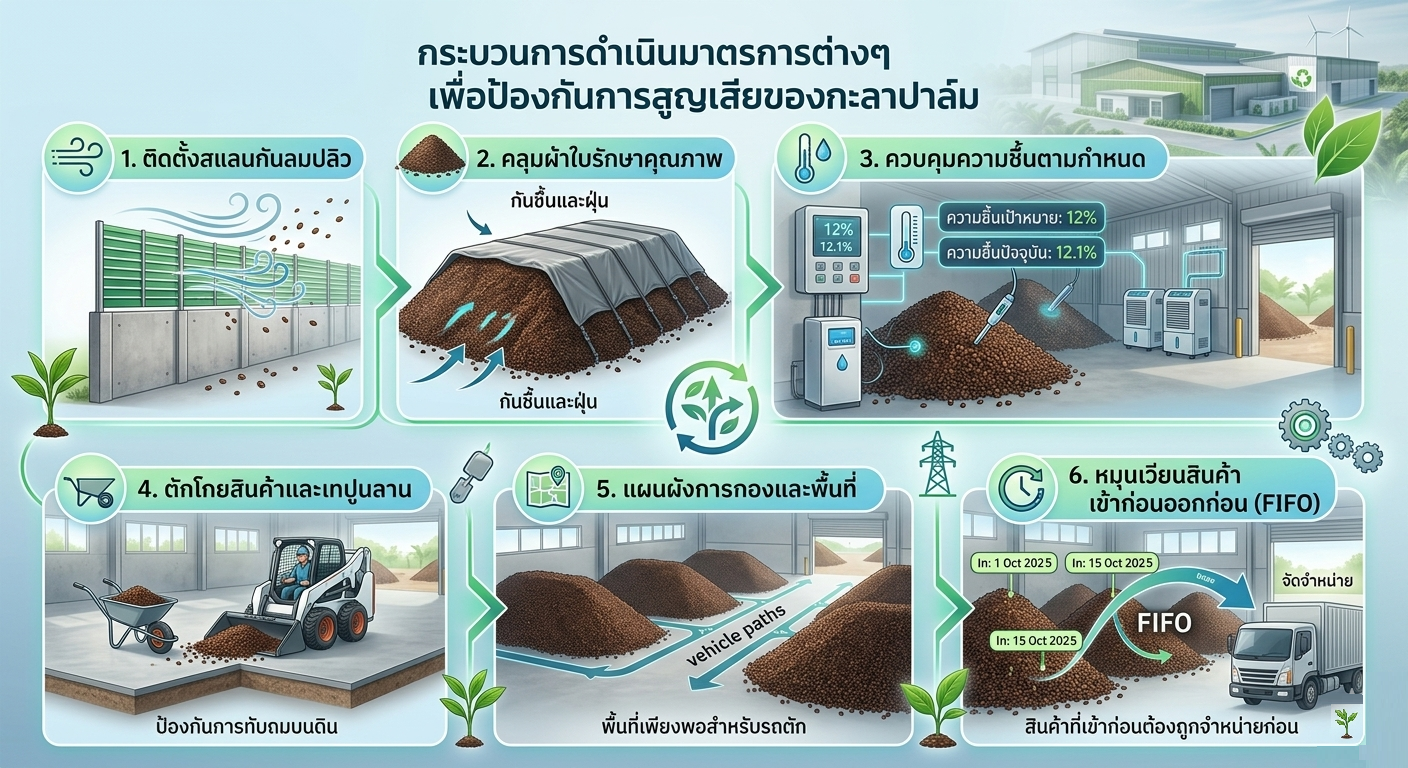
| Risk of loss from inventory management | The company's warehouse will comprise two distinct areas for inventory storage: (1) a warehouse section, constructed as an open building, designated for stacking goods that must not be exposed to water, such as wood shavings, sawdust, wood dust, and biomass briquettes; and (2) an open yard section for stacking goods that can withstand water exposure, such as palm kernel shells, wood chips, wood slabs, and wood scraps. These storage conditions may lead to product losses, including items being blown away by wind, reduced product moisture due to sun exposure, erosion or damage from continuous rainfall, and product deterioration resulting from prolonged storage without proper inventory rotation. | Inventory accumulation, lack of product turnover, loss of goods stored in the warehouse, and a decline in market prices of goods. | The Company has therefore implemented an efficient warehouse management system. Specifically, regarding the risk of declining product prices, the Company collects historical production and price data, compiles it into statistics to forecast the appropriate quantity and price of products for each period of the following year in Thailand, Indonesia, and Malaysia, as well as estimating customer demand both domestically and internationally. This is to efficiently manage the quantity of inventory to be stored for each product type at different times. Furthermore, regarding the risk of loss of goods stored in the warehouse, the Company has established operational procedure manuals for various aspects, including training personnel to ensure efficient operations. Various measures have been implemented to prevent losses, such as installing shade nets above the walls around the warehouse fence to prevent goods from being blown away by the wind, implementing measures to maintain product humidity at customer-specified levels, covering goods with tarpaulins to preserve their quality, regularly scooping up accumulated goods from the yard floor, paving concrete at all product stacking yards in every warehouse to prevent losses from goods accumulating on the ground, and arranging the product stacking layout to ensure sufficient space between stacks for forklifts to access and retrieve goods from every stack, thereby ensuring that goods are rotated for sale, with a first-in, first-out (FIFO) principle. In addition, the Company conducts physical inventory counts by the warehouse team at the end of every month. Furthermore, independent surveyors are hired to conduct inventory counts twice a year, specifically mid-year and year-end, to confirm the accuracy of the recorded inventory balances. With the aforementioned measures, the Company believes that any losses arising from inventory management will not significantly impact the Company's future operational performance and financial position. | 1721 · Description: Inventory risk · Info category: OPERATIONAL_RISK |
| Risk of bad debt from advance payments for goods not received. | Most of the company's product purchases will have payment terms involving advance payment for goods in the amount specified in the contract. This typically involves transferring a certain amount of money to the product manufacturer in advance as payment for goods. Upon receipt of goods, the value of the received goods will be deducted from the advance payment balance. Until the advance payment falls below the agreed-upon amount, the company will transfer advance payment back to the product manufacturer to replenish the full advance payment amount specified in the purchase agreement. The amount of advance payment for goods for each product manufacturer will depend on the quantity of goods that the supplier has agreed to sell to the company. This policy of advance payment for goods is a common practice for businesses involved in the procurement and distribution of biomass fuel, which is intended to ensure that the product manufacturer or supplier will sell the goods they produce or procure to the company in the agreed-upon quantity. Therefore, the company may face risks from having made advance payments for goods, but the supplier being unable to deliver the goods to the company or delivering an incomplete quantity as agreed. | This may affect the company's financial position and operating performance. Specifically, the company may not receive a refund for advance payments for goods if the supplier is unable to deliver the goods to the company. Furthermore, the company may lose sales opportunities due to insufficient goods for sale. | The company has established a sub-committee to consider credit limits for both trade accounts receivable and advance payments for goods. This sub-committee is responsible for reviewing and screening information of business partners with agreements for the company to make advance payments for goods, including, but not limited to, business partner registration details, financial information, and other business data. The Chief Financial Officer must always participate in the consideration and provide approval for the sub-committee's decisions. The company will make advance payments for goods to business partners only after receiving approval from the Managing Director and within the approved credit limit. Furthermore, the company manages the risk associated with advance payments by reducing the advance payment limit to an appropriate level based on the business partner's capability. In instances where suppliers deliver goods in small, gradual quantities, resulting in advance payments remaining with the suppliers for an extended period, the company implements measures to periodically monitor these suppliers to ensure that all goods are received completely as per the contract. Consequently, the company is confident that business partners to whom advance payments are made possess the capability to deliver all goods according to the contract, and significant issues with provisions for doubtful accounts, as experienced in the past, will no longer arise. | 745 · Description: Loss or damage from non-compliance of partners or counterparties · Info category: OPERATIONAL_RISK |
| Risk of competition and ease of entry for new operators. | Currently, there are numerous businesses engaged in the procurement and distribution of biomass fuel, whether they are direct producers, procurers and distributors similar to the Company, or solely distributors. These operators include both domestic and international entities, as significant capital is not necessarily required to enter this business. | This leads to intense competition in this business, particularly price competition, while most biomass fuel producers are small-scale operators. | The company therefore places importance on its personnel, who are considered a vital resource in business operations, by providing appropriate compensation and regular training to develop knowledge and enhance work potential, and to retain quality and experienced personnel with the company for a long time. Furthermore, the company has operated this business for a long time by maintaining quality in selling products and providing services, whether it is the quality of biomass fuel that meets customer requirements, and services that facilitate customers, providing consultation regarding the use of machinery and equipment, including suitable types of biomass fuel, assisting customers in resolving problems arising from machine operation, etc. This makes the company trustworthy to customers who purchase products from it, which is a crucial part of the biomass fuel distribution business. In addition, the company offers a variety of biomass fuel types that can be used interchangeably when certain types of biomass fuel are in low production. Coupled with the company's capability to procure biomass fuel from both large and small producers in Thailand and abroad, this gives the company an advantage over competitors who are small-scale traders selling limited types of biomass fuel and cannot procure large quantities of biomass fuel. The company therefore believes it can compete in this business and continue to grow. | 1714 · Description: Competition risk · Info category: STRATEGIC_RISK |
| Risk of reliance on the company's specialized personnel | The business of sourcing and distributing biomass fuel is an industry that relies on personnel with extensive experience and expertise. This necessitates the company's reliance on such personnel, particularly those in sourcing, domestic and international sales, and inventory management. |
| Knowledge and System Management
Human Resource Management
System and Technology Utilization
| 738 · Description: Reliance on employees in key positions · Info category: OPERATIONAL_RISK |
| Logistics Management Risk | While the company's domestic customers are distributed across all regions, logistics is therefore a primary factor in business operations, as it impacts the cost of goods sold, product quality, and the timeliness of goods delivery. |
| The Company established a subsidiary, Sathaporn Thanapat Co., Ltd. ("STP"), in which the Company holds a 99.99% stake. STP manages land transportation for the Company. A portion of the transport trucks are owned and managed by STP itself, while for the remainder, the Company utilizes services from partner vehicles. The Company regularly uses transportation services from over 100 providers. The decision on which type of vehicle and which transportation service provider to use for the Company's goods is based on the type of product being transported, the volume per trip, and the expertise of each transportation operator. Furthermore, trucks are utilized for round-trip transportation (not carrying goods one-way only), which ensures maximum efficiency in transportation management and reduces transportation costs. Based on the foregoing, the Company believes that its transportation management is highly efficient. | 755 · Other name: Logistics Management Risk · Description: Other · Info category: OPERATIONAL_RISK |
| Risk from foreign currency exchange rate fluctuations | Currently, the company imports palm kernel shells from abroad and settles payments for these goods in United States Dollars. The imported goods are partly for domestic distribution and partly for export to foreign countries (with the majority being exported). Exports to foreign markets are conducted through ports located near the company's warehouses. The company receives payment for its goods in United States Dollars. Consequently, high volatility in foreign exchange rates could significantly and negatively impact the company's business operations, financial performance, and financial position. |
| The company will manage risk by entering into forward foreign exchange contracts (Forward Contract) with domestic commercial banks to mitigate the impact of exchange rate fluctuations that may affect the company's performance. | 764 · Description: Fluctuation in exchange rates, interest rates, or the inflation rate · Info category: FINANCIAL_RISK |
| Cybersecurity Threat Risk | Computer systems and networks, including the internet, are considered essential tools for conducting business today, whether for data storage, communication, data transmission and reception, data analysis, or report preparation for presentation to both internal and external stakeholders of the company. Consequently, there is a risk that the network system may be subjected to attacks from malicious external parties. |
| The Company recognizes the widespread impact of cyber threats and has established measures and guidelines to prevent risks related to data and internal networks within the Company. For instance, the Company has installed Firewall systems to prevent external attacks. Antivirus software is installed on all computers and kept up-to-date at all times. Furthermore, data access rights are defined according to employees' current positions, and data is backed up to support emergency situations, ensuring business continuity. | 744 · Description: Information security and cyber-attack · Info category: OPERATIONAL_RISK |
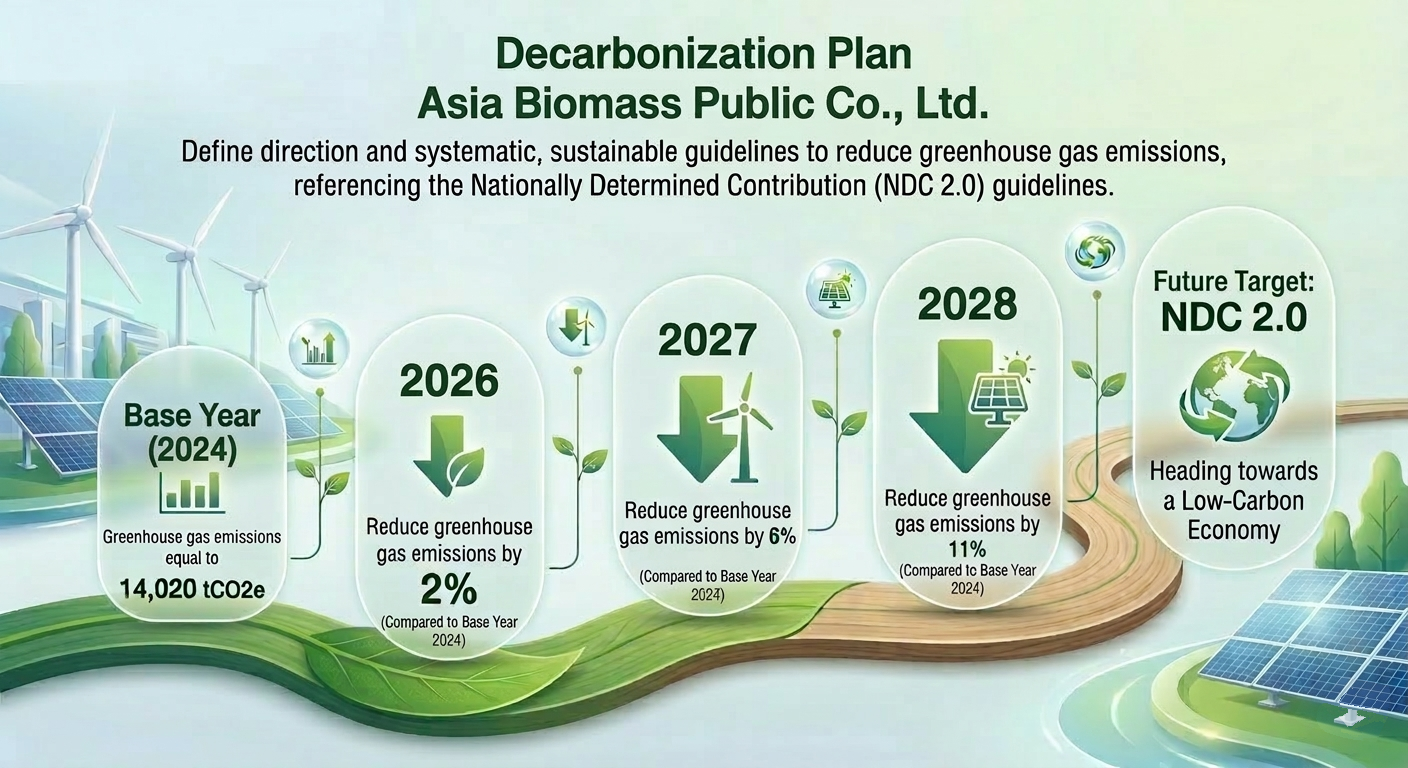
| Environmental and Climate Change Risks | As an organization striving to be the "Flagship for Sustainable Energy," the company recognizes that environmental and climate change risks (Climate Change), stemming from the impacts of climate change, require collaborative efforts from all sectors for their mitigation. This is not merely a social responsibility but a strategic risk that directly affects the stability and long-term growth of the business. |
|
| 750 · Description: Climate change and disasters · Info category: OPERATIONAL_RISK · 1717 · Description: ESG risk · Info category: STRATEGIC_RISK · 751 · Description: Impact on the environment · Info category: OPERATIONAL_RISK · 1719 · Description: Climate change and disasters · Info category: STRATEGIC_RISK |